


From Tragedy to Cooperation: The Birth of a Global Legal Network
Insights from a Special Edition of Insuralex Academy
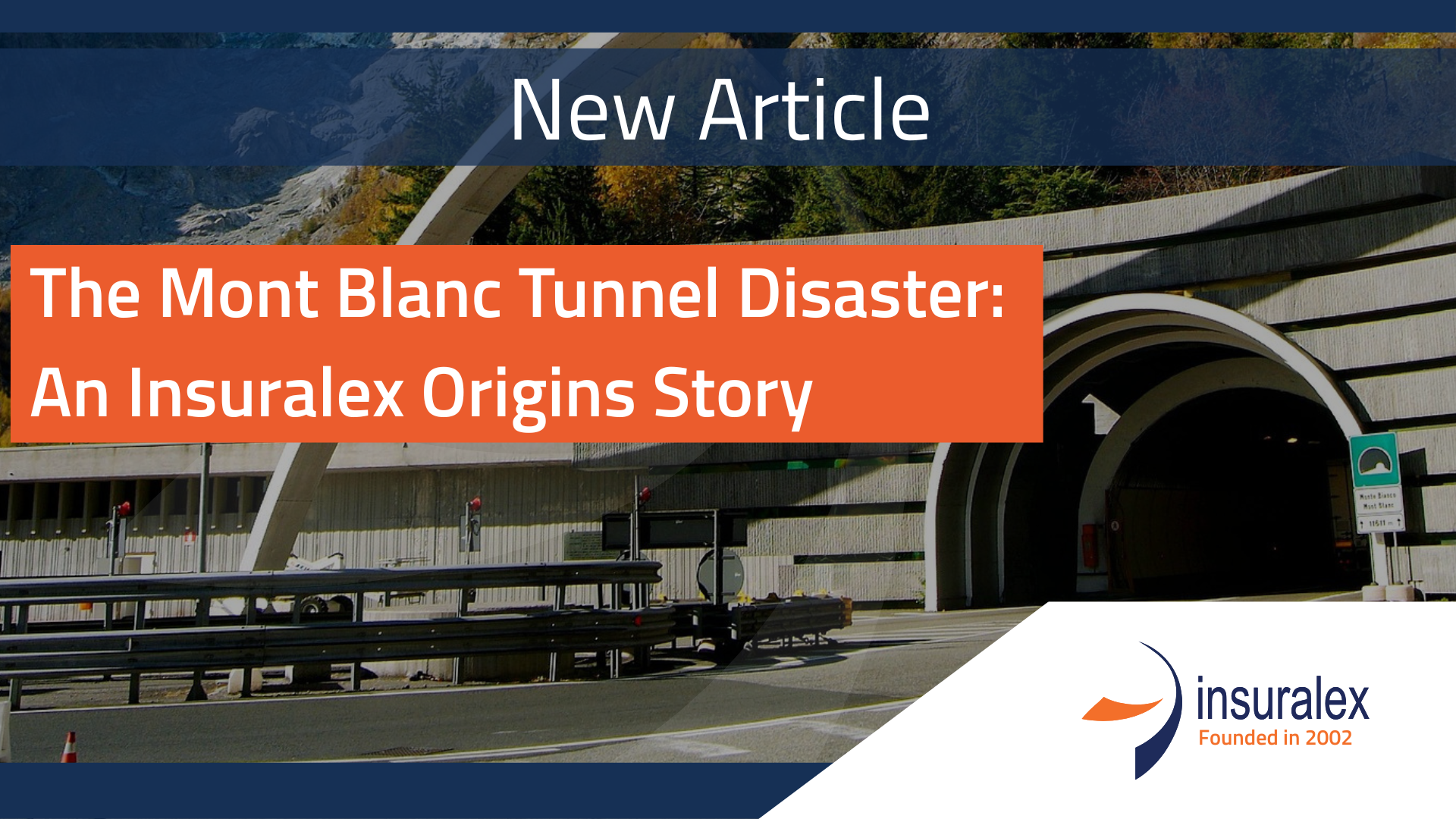
On 24 March 1999, a fire broke out inside the Mont Blanc Tunnel, the 11.6-kilometre road tunnel linking France and Italy beneath the Alps. What began as a routine freight journey quickly turned into one of Europe’s deadliest infrastructure disasters. A Belgian truck transporting flour and margarine caught fire deep inside the tunnel, generating extreme heat and dense, toxic smoke. Within hours, 39 people had lost their lives.
Subsequent investigations revealed a convergence of factors: combustible cargo, insufficient ventilation, delayed emergency response, and the inherent challenges of coordinating rescue efforts in a bi-national piece of infrastructure governed by various legal systems. The tragedy prompted sweeping regulatory reforms across Europe, from tunnel safety standards to emergency response protocols. It also triggered one of the most complex cross-border insurance and liability investigations ever seen on the continent.
More than two decades later, the Mont Blanc Tunnel fire remains a defining case study in risk, responsibility, insurance, and international legal cooperation.
Revisiting the Case Through Insuralex Academy
These issues were revisited on 16 December 2025 during a Special Edition of Insuralex Academy, the internal training program of Insuralex, the world’s largest, oldest, and most prestigious network of insurance and reinsurance specialist law firms.
The webinar brought together two seasoned lawyers who were directly involved in the aftermath of the disaster: Alessandro Giorgetti, of Studio Legale Giorgetti in Italy, and Paul Muylaert, of the Belgian firm Paul Muylaert – Cabinet d’Avocats. The session was expertly moderated by Stefanie Declerck, also of Paul Muylaert law firm.
Inside the Investigation
During the webinar, the speakers retraced the early days of the legal and technical investigation. They described a case marked by jurisdictional fragmentation, cultural differences, and legal uncertainty. The Mont Blanc Tunnel, while physically singular, was by international convention divided in two equal sections so that a portion of the French territory was subject to Italian regulations and laws and it was exactly in that portion of the tunnel that the fire started — a reality that complicated liability analysis, insurance coverage, and procedural coordination.
One of the most striking aspects discussed was how the technical cause of the fire was ultimately confirmed. Rather than emerging from a single decisive report, key findings surfaced gradually, sometimes by chance, during later testing and expert examinations. This underscored the
importance of persistence, collaboration, and trust among legal teams operating across borders and their Principals.
Beyond the technicalities, the speakers reflected on the human dimension of the tragedy — including the actions of Italian motorcyclist Pierluigi Tinazzi, who repeatedly entered the smoke-filled tunnel to rescue trapped motorists, saving several lives before losing his own.
The Birth of a Global Legal Network
A central theme of the discussion was how the Mont Blanc case exposed a structural gap in the legal market and created an opportunity. At the time, there was no established global network of independent law firms dedicated exclusively to insurance and reinsurance, capable of responding rapidly and coherently to a multinational catastrophe.
Out of that experience emerged Insuralex — a network built on technical excellence, local expertise, and personal trust. Through the collaboration of founding firms Studio Legale Giorgetti (Italy), Paul Muylaert – Cabinet d’Avocats (Belgium), and SCP Soulie & Coste-Floret (France), what began as professional collaboration evolved into long-term partnership and friendship, enabling member firms to handle complex, cross-border insurance matters with speed and consistency. Today, Insuralex spans the globe in over 50 jurisdictions.
Enduring Lessons for Today’s Professionals
The webinar concluded with reflections that resonate well beyond the Mont Blanc Tunnel. For today’s legal and insurance professionals, the case remains a powerful reminder that catastrophic risks do not respect borders, and neither can the response to them.
International cooperation, deep sector specialization, and trusted professional networks are no longer optional — they are essential. As infrastructure projects grow larger and risks more interconnected, the lessons of the Mont Blanc Tunnel Fire continue to shape how the global insurance legal community prepares for the crises of tomorrow.
